
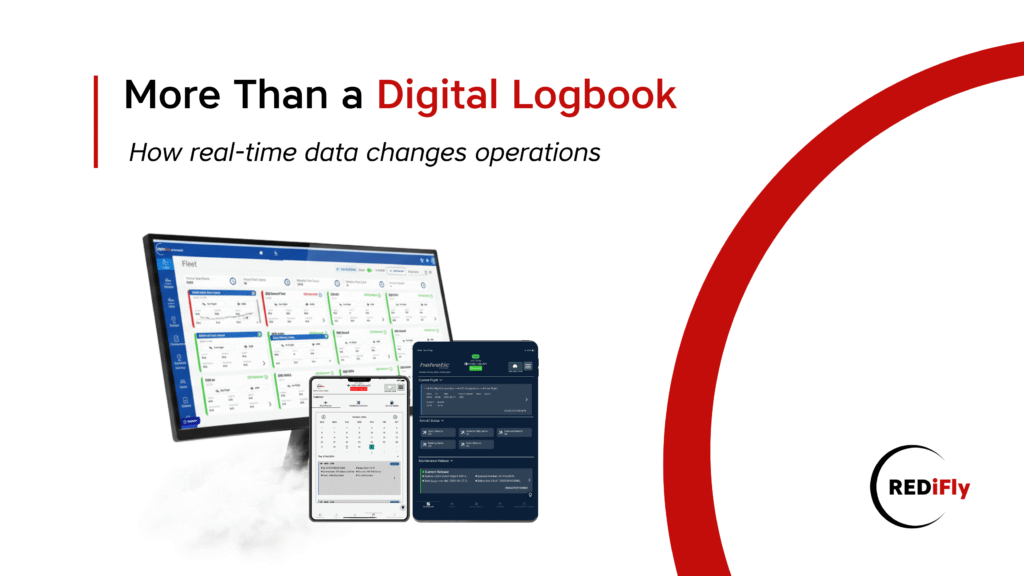
Most eTechlogs replaced paper, but many still rely on disconnected workflows. The real shift is how information flows across the operation and how decisions are made as a result.
Moving from a paper technical log to an electronic technical logbook is often described as a simple transition. Paper to digital. Job done.
But that framing misses the more important shift entirely.
The technical logbook sits at the centre of every airworthiness decision. Flight crew and engineers raise, assess, and act on defects there, while maintenance teams, MCC, and operations all rely on the same information to make decisions about aircraft status and scheduling. What really changes when you move to a modern eTechlog isn’t the format. It’s how information moves through the operation, who can act on it, and when.
When that information is delayed or inconsistent, decisions take longer and are made with less confidence. Get it right, and the operation runs much more efficiently.
Why paper-based workflows slow everything down
The core limitation of paper isn’t a lack of data. It’s timing.
A defect raised by flight crew doesn’t become visible to maintenance until the aircraft arrives and someone physically hands over the log. Until that moment, planning is limited and teams are forced to make decisions with incomplete information. The knock-on effect is predictable: teams work in sequence, each stage waiting on the one before it. Maintenance waits for the log. Operations waits for maintenance. Information moves step by step, and every step introduces delay.
The operation works, but it’s always reacting slightly too late.
The real problem: fragmentation didn’t disappear with some digital systems
Replacing paper was the first step. But most legacy eTechlogs stopped there.
They changed the format but they didn’t fix the underlying problem. They didn’t remove fragmentation.
In practice, that means data still exists across multiple systems. Information still needs to be re-entered or reconciled. Updates aren’t always synchronised in real time. Teams still rely on manual coordination to understand the full picture. So while the log is digital, the workflow often isn’t. Information still moves in steps, and decisions are still delayed.
If the system doesn’t remove fragmentation, it hasn’t really solved the problem.
What actually changes when fragmentation is removed
A modern system like the REDiFly eTechlog addresses that problem at the source.
Instead of manually passing information between systems, teams capture it once — in a structured way — and it becomes immediately available across the operation. Data quality improves straight away. But the more significant shift is what happens next.
Teams stop waiting for information. They start working from it as it’s created.
Maintenance, MCC, and operations can see defects and aircraft status in real time. Workflows shift from sequential to parallel. Duplicate data entry disappears. And the role of the technical logbook changes along with it, it’s no longer just capturing information. It becomes the point where decisions begin.
This is the principle REDiFly was designed around: helping operators move away from fragmented workflows and towards a connected, real-time operational model.
What this looks like in real operations
The impact becomes clear when you see it in practice.
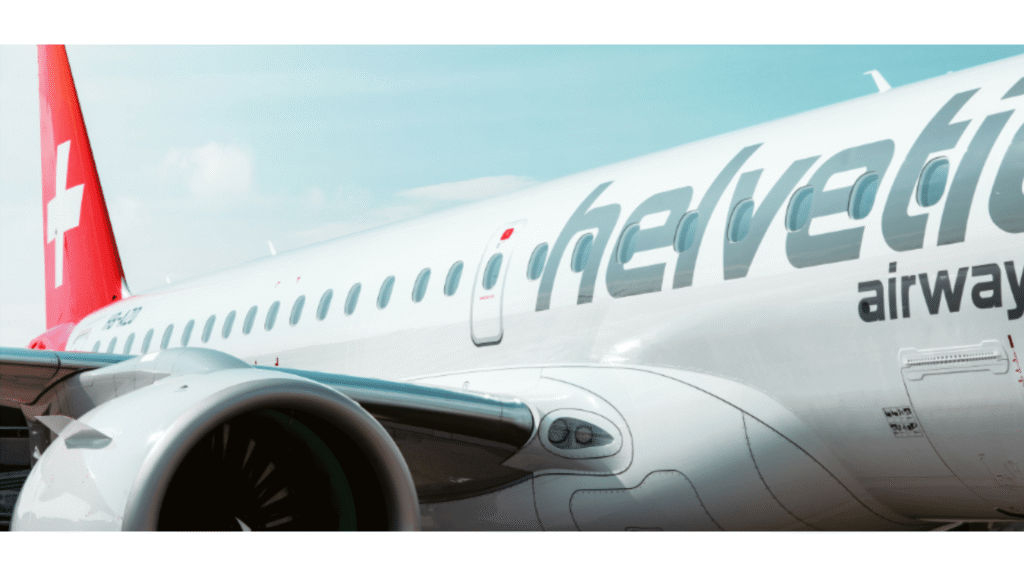
In our recent Helvetic Airways implementation, more than 40,000 sectors were completed in the app, with over 4,500 defects raised and managed within the eTechlog. Paper processes that had previously generated 30 to 60 log errors per month were reduced to near zero.
At that level, the difference isn’t incremental. It changes how the operation runs day to day.
Accurate, structured records make information fully traceable and easier to review, simplifying audit processes and improving confidence in the data. Airworthiness and maintenance teams are no longer spending time identifying, correcting, and reconciling log errors, removing a layer of manual effort that compounds quickly at scale.
But the bigger change is how information is used in real time. Consider a typical defect raised by flight crew. In a fragmented process, that information moves slowly… even in some digital systems, it still needs to be transferred, checked, or confirmed before it becomes actionable.
With a modern eTechlog that has full integration capabilities, that defect is visible immediately to MCC and maintenance teams. That one shift changes everything about the response.
Instead of reacting once the aircraft arrives, teams can assess the issue in real time and begin planning in advance. Engineering prepares for rectification earlier. Operations has a clearer view of aircraft availability when making scheduling decisions. Maintenance works from live data captured at source, with a shared view of the aircraft’s technical status, not delayed or re-entered information.
Earlier visibility allows line maintenance to reduce the risk of last-minute delays and keep aircraft on schedule. Even small improvements matter here, particularly in high-frequency operations where delays compound quickly.
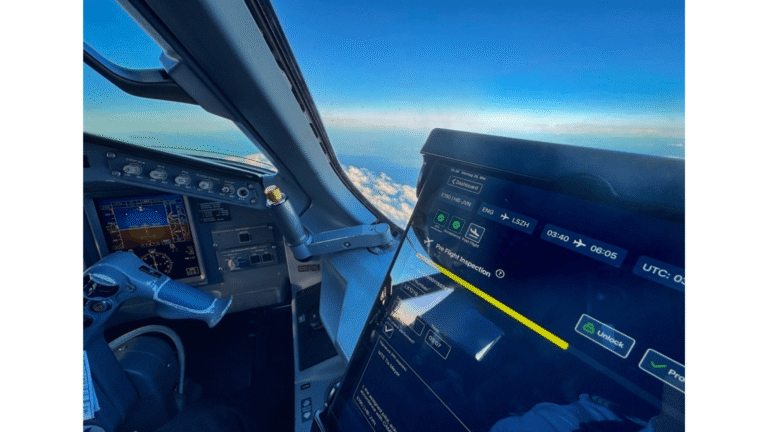
In the Helvetic rollout, flight crew could continue to capture and manage data even in low-connectivity environments, with full offline capability and automatic synchronisation once connectivity was restored. The flow of information continued without interruption, and teams maintained full visibility across the operation.
Across thousands of sectors, that consistency becomes critical. Small inefficiencies compound at scale, adding friction into processes that need to remain controlled and predictable. Removing those points of friction improves efficiency and gives teams greater control over how decisions are made.
Why this happens: modern architecture enables real integration
This is where the underlying system design becomes critical, and where legacy systems start to show their limits.
Most legacy eTechlogs are constrained by how they were built. Integration capability is partial. Data flows are often one-way. Information can be pushed out, but not synchronised back in real time. That’s the architecture that creates fragmentation, and patching around it doesn’t fix it.
Modern systems are built differently. A modern eTechlog supports two-way integration, allowing data to move between systems in real time. Defects raised by flight crew flow directly into maintenance systems. Updates from engineering are reflected back into the log without delay. The result is a single, consistent view of the aircraft across the entire operation.
Teams no longer need to cross-check systems, chase updates, or manually align information. Everyone works from the same, up-to-date picture at all times.
The contrast is stark:
Legacy system → fragmented data → delayed visibility → slower decisions
Modern system → real-time synchronisation → shared data → faster, more confident decisions
In the Helvetic implementation, bi-directional integration with AMOS (MRO) and WINops (Ops) eliminated manual re-entry and ensured that both flight operations and maintenance teams were always working from the same data. That’s what allows a technical logbook to function as a true decision point, rather than just a record.
How a real eTechlog implementation works in practice
Most operators already understand what an eTechlog is. The question now is how to choose the right solution and implement it in a controlled, low-risk way.
A successful rollout follows a structured process that gives teams time to adapt and minimises disruption to daily operations. In the Helvetic Airways implementation, this included:
- A three-month dual-run phase, with paper and digital logs operating in parallel
- More than 1,000 flights completed during the transition period
- Close engagement with the national aviation authority throughout the approval process
The result was a controlled rollout, strong adoption, and no disruption to daily operations.
That outcome comes from having a clear process and the right level of support at every stage. We work closely with operators through both approval and rollout. For approvals, we provide documentation, checklists, and step-by-step guidance based on experience working with multiple authorities. Training is delivered through a mix of in-person sessions, online modules, and a train-the-trainer approach, supported by a library of role-specific video guides for flight operations, maintenance, and engineering.
Each operator is assigned a dedicated Client Success Manager, with 24/7 support available to ensure assistance is always on hand in a live operational environment. The focus is straightforward: make sure teams are confident using the system from day one, and that adoption fits naturally into existing workflows.
“REDiFly’s interface is intuitive and easy to use. Real-time syncing means logbook data is instantly available in AMOS, WinOps, and our other connected systems, allowing us to stay focused on the flight, not the paperwork.”
— Helvetic Airways Pilot
Because the success of an eTechlog isn’t just in the software. It’s in how it’s introduced, how it fits into daily workflows, and how quickly teams can rely on it in real operations.
Choosing an eTechlog that actually fits your operation
Choosing the right eTechlog isn’t just about functionality. It’s about how the system performs when it becomes part of the operation, under real pressure, at real scale, every day.
When evaluating options, operators should be asking:
- Does it remove fragmentation, or just digitise it?
- Can it support real-time, two-way integration?
- Does it provide a single, consistent view of the aircraft?
- Can it be implemented in a controlled, low-risk way?
- Will it improve how decisions are made across the operation?
- Can the app adapt to our workflows and processes?
Because the real shift isn’t from paper to digital. It’s from delayed, fragmented workflows to real-time, connected operations.
REDiFly is built around that model. A modern, flexible eTechlog designed to capture structured data at source, support real-time visibility across teams, and enable true two-way integration with the systems operators already rely on. Rather than working around system limitations, it’s designed to support how operations actually run, and how they need to evolve in an increasingly digital industry.
See what a modern, connected eTechlog looks like in your operation
If you’d like to explore what this could mean for your operation, book a short discovery call with one of our team. We’ll walk through:
- How the system works in practice
- What implementation looks like
- How it integrates with your existing environment
👉 [Book a discovery call below]