
- More time to act before the aircraft arrives
- Better technical records with fewer errors to correct
- Less duplicate data entry and more time for high-value work
- A shared, current picture of aircraft status
- Greater resilience when another system is unavailable
- Faster audit preparation and easier record retrieval
- Better fleet planning and a stronger data foundation
Most conversations about electronic technical logbooks begin with replacing paper.
But removing the paper technical log is not, by itself, the business case. The real eTechlog benefits appear in what changes afterwards: maintenance teams receive information sooner, fewer records require correction, skilled staff spend less time re-entering data, and operational teams gain a clearer picture of aircraft status.
A successful implementation should improve how accurately the operational record is captured, how quickly it moves and how effectively teams can act on it.
The IATA Airline Electronic Logbook Implementation Roadmap supports this wider view. It warns against treating an eTechlog as a simple electronic copy of a paper form and emphasises the surrounding workflows, users and systems that determine whether the project delivers value.
Software alone cannot guarantee the outcomes below. They also depend on the airline’s procedures, integrations, user adoption and implementation approach. But these are the operational and business outcomes a modern eTechlog should be designed to support.
1. More time to act before the aircraft arrives
With a paper technical log, a newly reported defect may remain at the aircraft until the record is handed over or manually entered into another system.
By the time the MCC receives the information, the aircraft may already be on stand and the turnaround clock is running.
A connected eTechlog can move that process forward. Once the defect has been entered, and where connectivity allows, the information can reach maintenance control while the aircraft is still inbound. The MCC can begin assessing the issue, communicating with the crew and preparing the engineer, tools, parts or troubleshooting information that may be required.
The repair itself may take the same amount of time. What changes is how much preparation can happen before the aircraft arrives.
The operational outcome is a faster line-maintenance response with better turnaround readiness. The wider business value here is support for more predictable operations and stronger on-time performance.
An eTechlog does not eliminate technical delays. It can, however, reduce avoidable time lost while information moves between the crew, MCC and maintenance team.
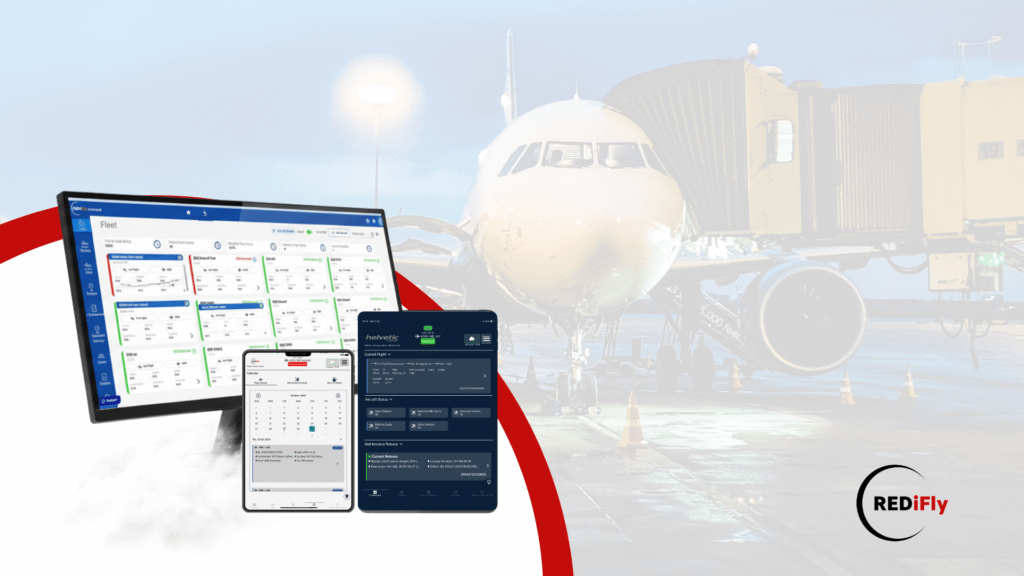
REDiFly is built around this timing advantage. When a defect is entered, the operational record can reach the relevant ground teams before the aircraft arrives, helping the response begin earlier rather than after the turnaround has already started.
2. Better technical records with fewer errors to correct
Replacing handwriting with a screen does not automatically improve the technical record.
A poorly designed digital process may still allow missing fields, incomplete signatures, inconsistent flight times or actions completed in the wrong sequence. The errors are simply digital instead of handwritten.
A successful eTechlog implementation should improve the record at the moment it is created.
Pre-populated flight information, required fields, automated calculations, electronically signed entries and guided defect or MEL workflows can help users complete the required process correctly the first time.
That matters because the aircraft technical log feeds much more than the record for one flight. Defects, flight hours, cycles, deferred items and maintenance actions become part of the information used for continuing-airworthiness control, maintenance planning, reliability reporting and audit preparation.
EASA describes detailed maintenance records as information used to determine aircraft configuration, airworthiness status and future maintenance requirements. Poor source information can therefore create consequences well beyond the original entry.
What this looks like in practice

Before implementing REDiFly, Helvetic Airways’ paper technical log was generating around 30–60 errors each month. Transcription mistakes, missing signatures and incomplete records required correction, follow-up and cross-checking across teams.
Since going live, Helvetic reports that recurring technical-log errors have been practically eliminated across more than 50,000 sectors and 5,000 managed defects.
Read the Helvetic Airways case study →The outcome is not simply cleaner data. It is fewer discrepancies appearing later as correction work, system mismatches, audit issues or delayed decisions.
3. Less duplicate data entry & more time for high-value work
Manual data transfer creates work without improving the aircraft.
When information from the technical log must be entered again into an MRO or operational system, skilled personnel spend time copying, checking and reconciling data that has already been recorded once.
The work can include entering defects and flight data, checking the new record against the original, resolving differences between systems, following up on missing details and confirming that rectifications or release information have been reflected correctly.
A well-integrated eTechlog can reduce this burden. Technical information can pass into the maintenance environment in a structured format, while rectifications, deferred-item information and release status can return to the aircraft-facing application.
The MRO remains the authoritative maintenance system. The outcome is not replacing it. The outcome is removing unnecessary work between the aircraft and the systems maintenance and CAMO already use.
An illustrative example
The exact cost savings will vary by airline and existing process. But even a two-hour reduction in technical log data entry and reconciliation per aircraft each week would return more than 100 maintenance and technical records hours per aircraft each year.
Across an 80-aircraft fleet, that would amount to more than 8,000 hours annually.
This is not an industry benchmark or a guaranteed saving. It shows how a relatively small weekly reduction can scale across a fleet.
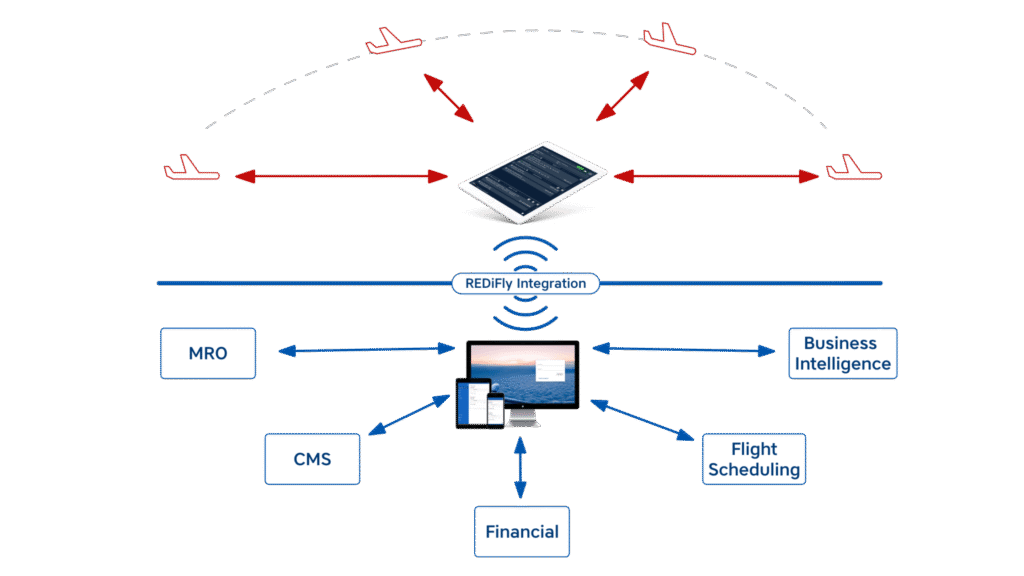
The REDiFly eTechlog supports one-way and two-way integration with MRO, CAMO, flight operations and other airline systems. Data is captured once and shared where it is needed, reducing duplicate entry while preserving established system ownership.
4. A shared, current picture of aircraft status
Different teams should not be making decisions from different versions of the aircraft’s technical status.
Flight crew need to understand the aircraft they are preparing to accept. The MCC needs visibility of inbound defects. Maintenance personnel need current defect and release information. CAMO needs reliable data for continuing-airworthiness oversight.
A successful eTechlog implementation helps keep these teams aligned.
Depending on the user’s role, this may include visibility of open defects, deferred items, current maintenance release status, recent maintenance actions, flight hours and cycles.
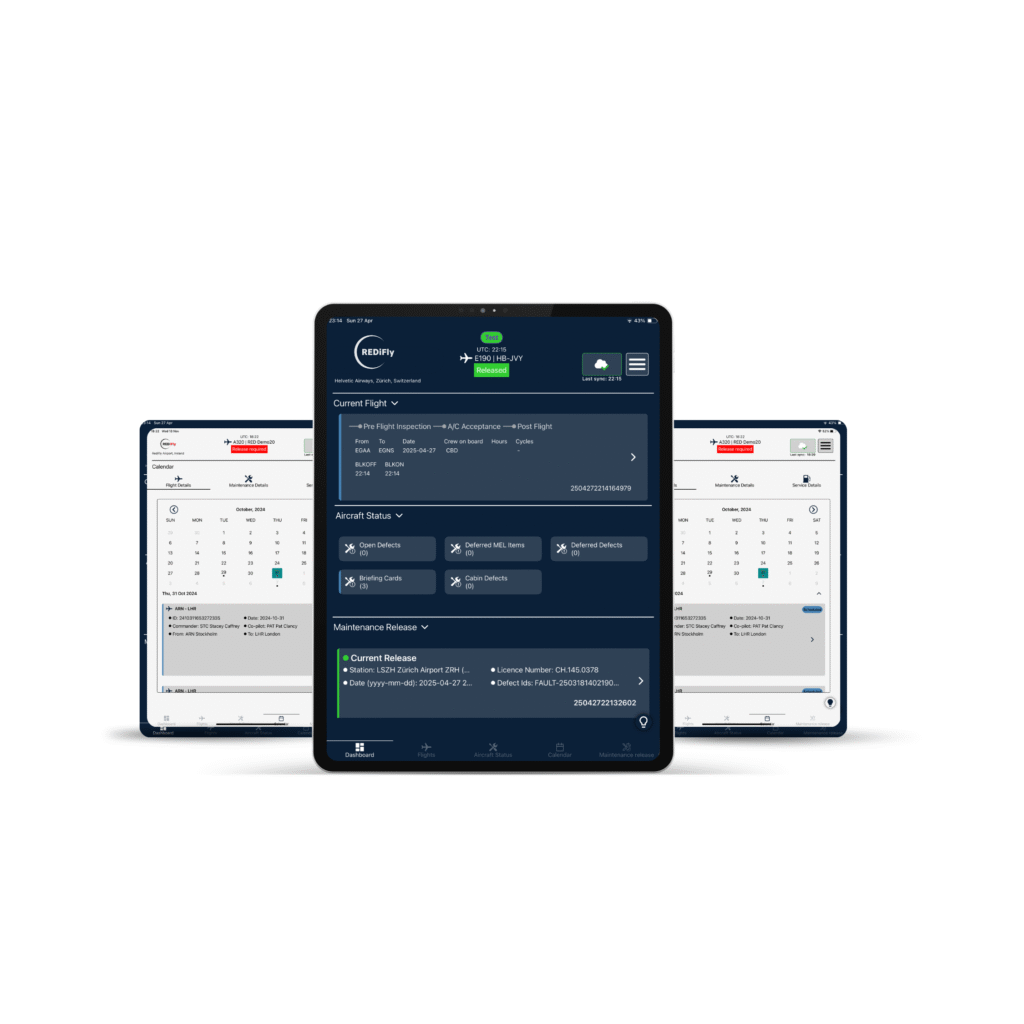
For pilots, secure read-only mobile access can also make relevant status information available before they reach the aircraft. This allows them to prepare before boarding, while formal entries, signatures and aircraft acceptance remain within the approved eTechlog workflow.
The outcome is better operational awareness. Each authorised user sees the information relevant to their role, drawn from the same current operational record of the aircraft.
This can reduce ambiguity during handovers, support faster decisions and give the airline stronger fleet-wide visibility of maintenance status.
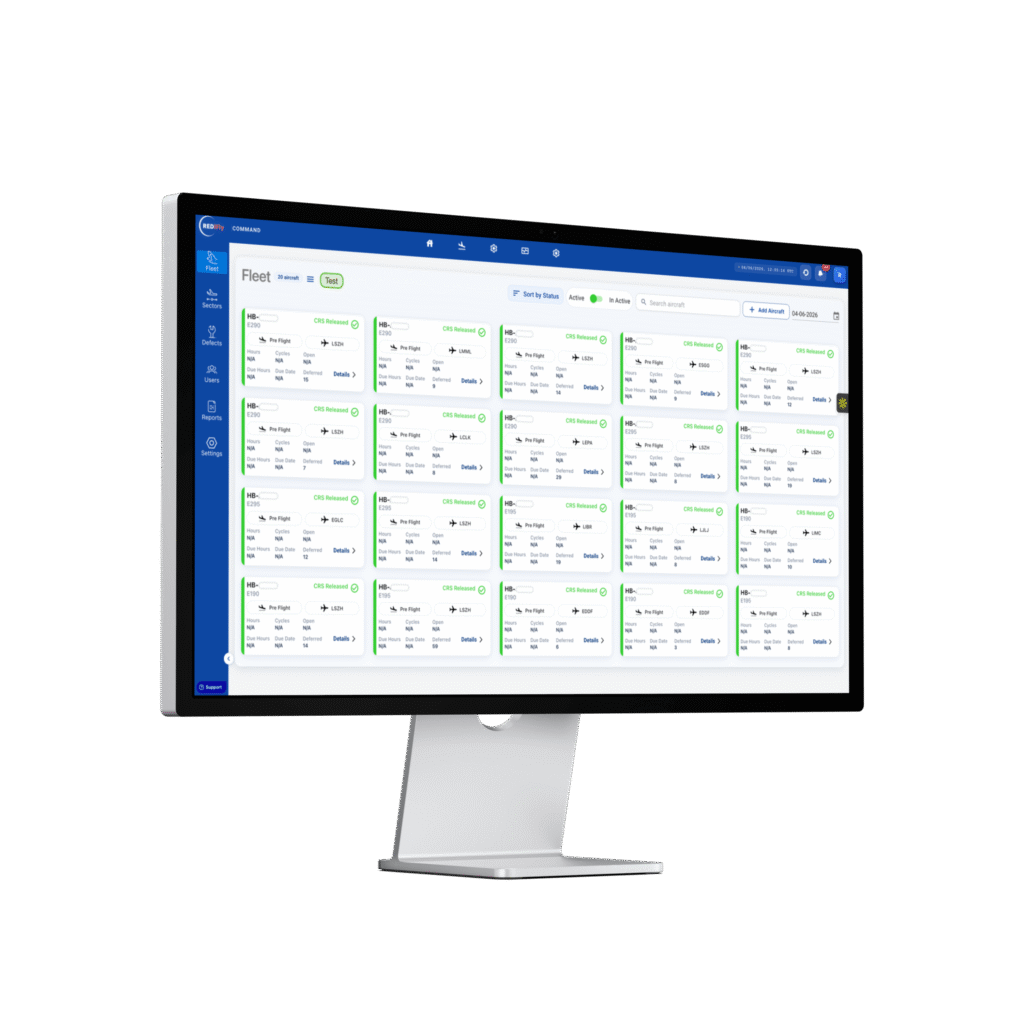
REDiFly gives pilots, MCC, maintenance and CAMO role-based access to the operational record. It is designed to provide a current picture of aircraft status without asking teams to reconstruct it across multiple disconnected systems. Its view-only mobile application can also give authorised pilots access to aircraft status before they reach the aircraft.
5. Greater resilience when another system is unavailable
A connected operation should not become a fragile operation.
An eTechlog may exchange information closely with the airline’s MRO, flight operations system and other platforms. That does not mean every aircraft-facing workflow should stop when one of those systems becomes temporarily unavailable.
Operators should consider what happens during:
- Loss of connectivity
- Device failure
- Ground-server or integration failure
- An outage in the maintenance-information system
The IATA roadmap identifies these as mission-critical scenarios that should be assessed and supported by defined mitigations. It also says an eTechlog should be capable of operating offline across multiple sectors where necessary.
A resilient system should allow approved workflows to continue, protect information during the disruption and synchronise or reconcile records when normal services return.
Independence does not mean replacing the MRO or transferring maintenance governance into the eTechlog. The MRO can remain the system of record.
It means the temporary loss of another platform does not automatically result in the loss of aircraft-status visibility or the ability to capture the next permitted technical entry.
REDiFly is designed to operate independently of the MRO and operations systems it connects to. It can continue supporting aircraft-status visibility and approved operational workflows during degraded connectivity or a connected-system outage, with information synchronised when normal services return.
6. Faster audit preparation and easier record retrieval
Paper records can be complete and compliant. The challenge is often the effort required to locate, validate and cross-check them when they are needed.
Before an audit, review or inspection, CAMO and Quality teams may need to gather records from multiple locations, identify missing entries, confirm signatures and reconcile the technical log against information held in other systems.
A successful digital implementation should make the history easier to retrieve and follow.
Authorised users should be able to identify:
- The original entry
- Who completed or signed it
- When the action took place
- The associated maintenance action
- Any subsequent correction
- The current status of the item
ICAO recognises the industry’s continued migration towards electronic aircraft maintenance and continuing-airworthiness records. It also identifies electronic signatures, record security, integrity and transferability between record systems as important considerations.
An eTechlog does not guarantee compliance or remove the airline’s record-keeping responsibilities.
The outcome is practical: records are available, legible and traceable, reducing the effort required to reconstruct the history before an audit or inspection.
REDiFly stores structured, time-stamped technical records that can be retrieved and exported for review, supporting audit preparation without forcing teams to rebuild the record from paper files.
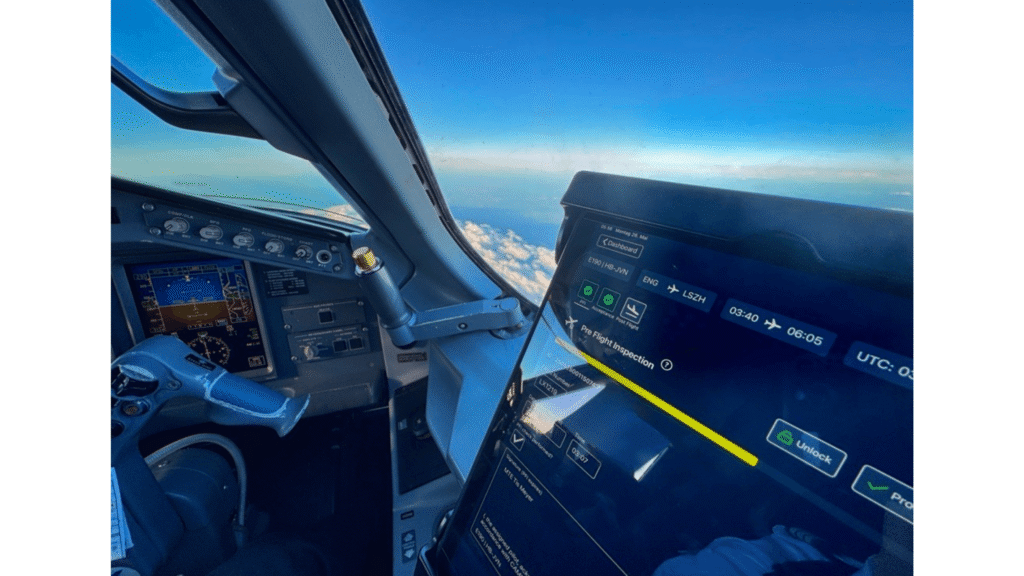
7. Better fleet planning and a stronger data foundation
Every sector creates operational data.
Each recorded defect, flight hour, cycle and deferred item adds to the airline’s understanding of fleet performance. But that information has limited long-term value when it is incomplete, inconsistently formatted or locked inside paper records.
A successful eTechlog implementation creates structured data at source.
This provides a stronger foundation for:
- Repetitive-defect monitoring
- Reliability reporting
- Fleet and aircraft-type comparisons
- Tracking deferred items and approaching limits
- Grouping maintenance work more effectively
The eTechlog should not be presented as automatically delivering predictive maintenance or preventing AOG events. Those outcomes depend on the airline’s wider systems, processes, engineering expertise and data quality.
Its role is to make the source information more complete, consistent and usable.
REDiFly captures defects, sectors, flight hours, cycles and deferred items as structured operational data from the moment they are entered. That gives airlines a cleaner foundation for reliability monitoring, recurring-defect analysis and whatever data-led capabilities they build next.
The result is value beyond the individual sector. The information captured today becomes more useful for the decisions the airline makes tomorrow.
The real business case goes beyond paper
The strongest business case for an electronic technical logbook is not that the paper disappears.
It is that the airline gains:
- More time to prepare for inbound defects
- Fewer records to correct
- Less information to re-enter
- More skilled hours for higher-value work
- A clearer picture of aircraft status
- Greater resilience during disruption
- Better data for planning and reliability
The technology matters because it enables these outcomes. Guided workflows improve data quality. Integration removes duplicate entry. Mobile access gives pilots earlier visibility. Offline capability and system independence support continuity.
But features are proof of the value, not the value itself.
The REDiFly eTechlog is designed around this principle. It improves the operational record crews and maintenance personnel capture, makes aircraft status available early enough to act and plugs into the systems airlines already use without becoming dependent on their continuous availability.
The outcomes above aren’t hypothetical. They’re what a successful implementation actually delivers. If you’d like to talk through what that could look like in your operation, specifically, with your fleet, your systems and your existing procedures, we’re happy to walk through it with you. Book a call below to chat to a member of our team.