

When operators begin looking at moving from paper to an electronic technical logbook, one question comes up early… Will this system actually fit how we work?
It’s a fair concern.
No two operations run in the same way. Procedures differ, fleets differ, and even where two operators face similar regulatory requirements, the day-to-day workflow behind the scenes can still look very different. That’s one of the main reasons paper has remained in place for so long. It may not be efficient, but it is familiar, adaptable, and easy to shape around the operation.
The challenge is that many digital systems solve one problem while creating another. They introduce structure, but often in a rigid way. Instead of improving the workflow, they require the operation to adapt to the software.
In practice, this can create issues:
- More back-and-forth between the flight crew and maintenance to clarify defects
- Duplicated effort in entering the same data across multiple systems
- Inconsistent data capture leading to misinterpretation and repeated defects
- Reduced confidence in the information being used to make operational decisions
In many eTechlog implementations, the biggest challenge is not the technology itself, but ensuring the system aligns with how different teams already work across the operation.
So while it is natural to compare digital systems with paper, that is only part of the picture.
The more important question is this, can the system adapt to the operation and continue to do so over time?
Moving Beyond Paper Is Only the First Step
For many operators, the first stage of the conversation is about replacing paper. That makes sense.
Paper-based aircraft technical logbooks slow information flow, limit visibility across the fleet, and create additional effort when records need to be reviewed, shared, or analysed.
But once an operator decides to digitalise, the decision shifts. It becomes less about paper versus digital, and more about ‘which platform gives us the right balance of structure, flexibility, performance, and long-term fit?’
A digital tech log or electronic technical logbook should not simply replicate the paper process. It should improve how information is captured, shared, and used across the operation, while still fitting into existing workflows.
This is where the design philosophy behind the system matters.
Rigid legacy systems often lead to workarounds, parallel processes, or incomplete adoption, undermining the very benefits digitalisation is supposed to deliver.
With the REDiFly eTechlog, the focus has been on building a platform that aligns with real operational environments rather than imposing a fixed structure.
Flexibility Means More Than “Customisable”
Flexibility is often used loosely, but in practice, it has a very specific meaning.
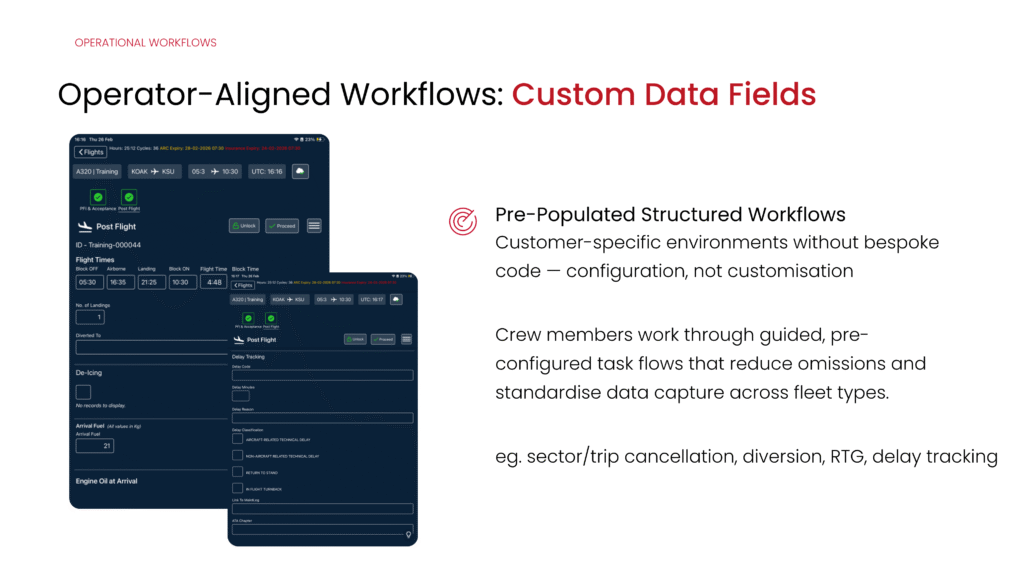
It means the system reflects how the operator works, not the other way around. That applies across several areas. Workflows should match how the operation actually handles flight phases, delays, diversions, and defects.
For instance, the structure of the paper logbook, how sectors are recorded, or even something as simple as a fuel uplift workflow can vary quite a bit. A good eTechlog should accommodate those differences, not try to standardise them away.
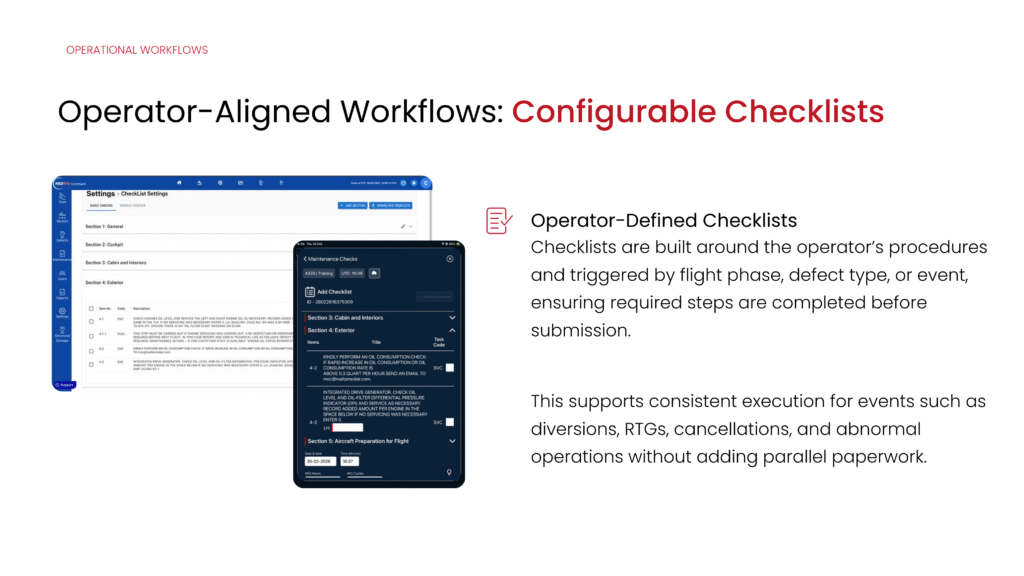
Checklists need to follow the operator’s actual procedures, not a generic template that looks good on paper but doesn’t match how crews work day to day.
The same applies to data capture. It needs to be structured enough to drive consistency and support downstream systems, but still flexible enough to let the crew describe defects properly. If you over-structure it, people find workarounds, entries become incomplete, and you lose important context.
That balance between structure and flexibility is where many systems fall short. And it’s also where a well-designed eTechlog makes the biggest difference, giving you clean, usable data without getting in the way of operations.
Instead of forcing standard processes, REDiFly allows operators to configure workflows, checklists, and data capture to match their environment.
The aim is not to create complexity.
It is to provide enough structure for consistency while allowing the operation to run as intended, by ensuring the system supports accurate defect capture, clear communication between flight crew and maintenance, and provides data that can be used for troubleshooting, tracking recurring issues, and planning maintenance.
A Modern Platform Should Fit Into Existing Device Strategies
Another practical consideration is how the system is deployed.
Some operators want the eTechlog integrated into their existing EFB environment. Others prefer dedicated devices. In many cases, it is a mix across fleets or roles. This is a decision that directly affects usability, training, and reliability of the system in day-to-day operations.
The REDiFly eTechlog is designed to support this flexibility.
It can be deployed directly within an operator’s EFB environment or on dedicated aircraft-assigned devices, depending on what best suits the operation. In both cases, it aligns with existing MDM environments, so operators retain full control over device configuration, security, and updates.
The result is a solution that fits naturally into the wider operational and IT landscape, rather than forcing change around it.
Responding to Market Demand for iOS
Cross-platform capability remains important, particularly for operators with varied environments.
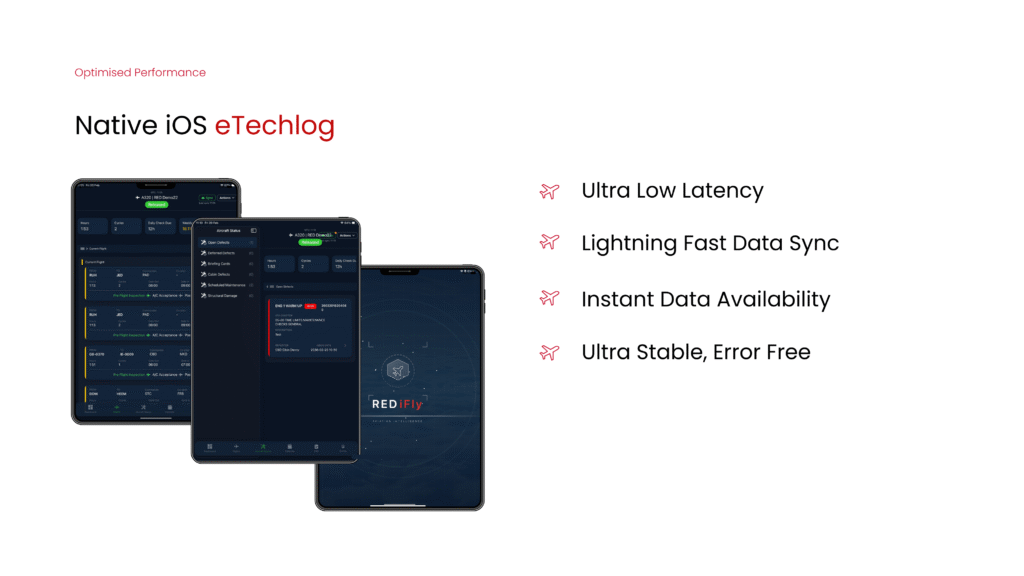
At the same time, there is a clear demand for iOS, especially in airline operations where iPads are already widely used. To support this, REDiFly has released a native iOS application.
Native performance improves responsiveness, stability, and usability under operational conditions. These are critical factors when crews are working under time pressure and require a system they can rely on without hesitation.
By combining cross-platform capability with a native iOS experience, the platform supports different deployment models while delivering optimised performance where it matters most.
Integration Matters More Than Ever
Replacing paper is valuable, but if the system then creates a new silo, the problem is only partially solved. Operators already rely on multiple systems across maintenance, planning, flight operations, and finance. The eTechlog needs to connect to that ecosystem.
This is where modern architecture becomes important.
REDiFly is built with modern REST APIs that support full two-way integration with third-party systems. This allows data to move cleanly between platforms, reducing duplication and improving consistency across digital tech log workflows.
A modern eTechlog implementation should support seamless integration, enabling data to flow between maintenance, CAMO, and operational systems without manual handovers.
More importantly, it ensures that maintenance, operations, and planning teams are working from the same set of accurate, up-to-date information.
When data is captured correctly at source and shared in real time, it becomes immediately usable across the operation, giving maintenance and operations teams the information they need to respond quickly and make informed decisions.
Rather than replacing existing systems, the eTechlog acts as a structured data capture and workflow layer that integrates with them. This approach improves data quality at source while maintaining clear system ownership.
Flexibility in Practice
This approach is not theoretical.
Following the implementation of the REDiFly eTechlog, Helvetic Airways highlighted the impact of having a system that aligns with their way of working:
“Going live with the REDiFly eTechlog has been a major milestone for Helvetic Airways. The system adapts to our processes, rather than the other way around, making it easier to collect and manage technical data. It has strengthened our operations’ data quality, security, and reliability across the network. We’re excited about what the future holds with REDiFly.”
— Christian Suhner, CTO, Helvetic Airways
What stands out here is not just the move away from paper, but the fact that the system aligns with the operation, making it easier for teams to capture and manage technical data while improving data quality and reliability across the network.
That balance is often what determines whether a system is fully adopted or becomes another tool that teams work around.
Flexibility Is Also About the Future
Operations evolve. Fleets change, procedures are updated, and new systems are introduced over time.
Implementing an etechlog that cannot adapt to those changes can quickly create limitations.
Implementing a legacy system today, particularly one without a modern and flexible backend, risks introducing constraints that only become visible after go-live.
One example is integration.
As operators continue to invest in digital ecosystems, the ability to connect with both existing and future systems becomes increasingly important. This could include integration with MRO platforms, operational systems, or even onboard systems such as ACARS, where real-time data exchange can further improve visibility and response times.
A system that is not built to support this level of integration can create new silos, requiring additional manual processes or workarounds as the operation grows.
Another example is how operational requirements change over time.
Introducing a new fleet, updating internal procedures, or responding to regulatory changes often requires adjustments to workflows, data capture, and reporting structures. A rigid system can make these changes difficult to implement, leading to misalignment between the system and how the operation actually runs.
A flexible, modern platform allows operators to:
- Adjust workflows as operations evolve
- Refine data capture as requirements change
- Integrate with new systems over time
This ensures the system continues to deliver value beyond the initial implementation and supports the operation as it grows and adapts.
Choosing the Right eTechlog for Your Operation
Flexibility in an eTechlog implementation is not about offering endless options.
It is about ensuring the system fits the operation, from day one and as it evolves.
The goal is not just to replace paper, but to implement a system that supports your workflows, to connect with your existing applications, and to provide data you can rely on every day.
If you’re evaluating your next step, the key question is simple: will the system adapt to your operation, or will your operation have to adapt to it?
If you’re exploring an eTechlog that fits how your operation works, you can book a call below to discuss your requirements.